Estimated reading time: 12 minutes
Ahoy there, Seekers and Wayfinders! This article is your essential guide on how to connect with your Inner Landscape for mental health—the vital terrain of your thoughts, feelings, and intuition that holds the key to lasting well-being. If you often feel overwhelmed, drained, or lost in worry, we’re showing you how to find your way back to calm. Think of this as clearing the fog so you can finally see your path. Do you ever wonder why you feel anxious even when everything is fine? Why is it so hard to stop worrying? Furthermore, how can you find genuine inner peace when the world is so loud?
Key Takeaways
- Connecting with your Inner Landscape enhances mental health by fostering self-awareness and understanding your emotions.
- Neglecting your Inner Landscape can lead to mental health challenges, including anxiety and emotional turmoil.
- Cultivating a balanced Inner Landscape promotes resilience, clearer decision-making, and authentic relationships.
- Practical steps like internal check-ins and acknowledging inner critics can help maintain mental well-being.
- You have the power to shape your responses; practice connecting with your Inner Landscape for lasting growth and peace.

This is the next chapter of your great quest, where we turn our attention inward. Today, we’re talking about connecting with your Inner Landscape, that vast, vital terrain of your thoughts, feelings, memories, and intuition. For a Wayfinder like you, this landscape is your most valuable map, yet it’s often the most neglected. We’re so busy navigating the external world—the deadlines, the needs of others, the endless news cycle—that we forget to check the conditions of our inner world.
Consequently, this neglect is a common source of many mental health challenges.
Here is your first “aha” moment: You are not your circumstances; you are the observer of your circumstances. Crucially, the state of your Inner Landscape determines how you respond to everything. Ignoring this crucial territory is like trying to sail a ship without knowing if the hull has a leak. We’re going to give you the tools to chart this interior sea, leading you directly toward greater self-awareness and mental well-being. This is where your true personal growth begins.
Defining the Inner Landscape: Your Compass for Mental Health
Your Inner Landscape is the sum of your internal reality. It’s where your resilience is forged, your fears reside, and your deepest desires whisper. Think of it as a house: is it a place of cluttered chaos, or is it a sanctuary of calm? For many Seekers, particularly those who are highly empathetic or creatively driven, this landscape can be prone to overgrowth. We tend to absorb the emotional weather of others, leaving our own internal atmosphere feeling stormy and unpredictable.
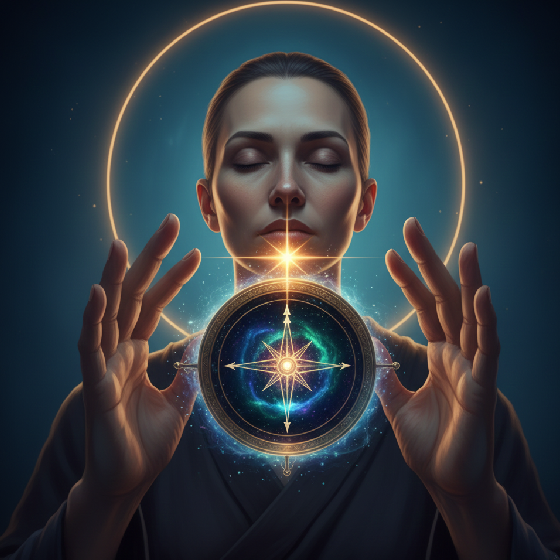
When we talk about connecting with your Inner Landscape for mental health, we mean practicing true self-awareness—the deliberate act of noticing, without judgment, what is happening inside you right now. For example, a client I’ll call “Karin,” a passionate caregiver, came to me crippled by anxiety. She was constantly focused on client approval, and her life felt dictated by external validation. The “twist” in her journey was realizing she was reacting to feelings from a past, long-forgotten professional setback, not the current, manageable stress. Her Inner Landscape was stuck in a loop of old fear.
We started simply: stopping three times a day to ask, “What am I actually feeling, and where do I feel it in my body?” This seemingly small step was a monumental shift. Ultimately, it allowed her to see her anxiety not as a life-sentence, but as a temporary, internal weather system. The personal growth here is realizing that your feelings are messengers, not masters. When you fail to connect with your Inner Landscape, you lose your internal compass. You might find yourself saying “yes” when you desperately want to say “no,” or feeling exhausted without knowing why. By cultivating this connection, you are actively choosing empowerment over passivity, recognizing that you hold the power to shape your response to life. It’s the difference between being tossed by the waves and steering the ship.
Understanding the Importance of Intuition
Your intuition, often felt as a gut feeling or a quiet knowing, is a core feature of your Inner Landscape. It acts as your internal GPS, guiding you toward decisions that align with your highest self. However, intuition can be easily drowned out by fear and external noise. A crucial part of connecting with your Inner Landscape for mental health involves learning to distinguish the quiet wisdom of intuition from the loud chatter of worry. Think of the Sun and your Moon Sign in astrology—the Sun represents your conscious will, but the Moon governs your emotional needs and intuitive responses. Therefore, neglecting this emotional center is akin to silencing half of your guidance system.
The Spectrum of Self: Balanced vs. Imbalanced Inner Landscape

The goal is not to eliminate challenges but to achieve a balanced, life-affirming relationship with your internal world. Think of the spectrum of your Inner Landscape as a garden: a balanced garden is tended, diverse, and supports life; an imbalanced one is either a neglected mess or a sterile, over-controlled patch. When you cultivate a Balanced Inner Landscape, you experience profound mental well-being. Here are five reasons why focusing on this positive state is essential for your quest to connect with Inner Landscape for mental health:
- Increased Emotional Resilience: A balanced inner world allows you to process setbacks without being shattered by them. You acknowledge the pain but don’t let it define you, leading to greater psychological strength. For example, studies show that individuals with higher levels of internal self-awareness have a 30% lower rate of experiencing emotional burnout.
- Clearer Decision-Making: When your internal “noise” is quieted, your intuition (your inner GPS) becomes clearer. As a result, you make choices aligned with your true values, which is key for personal growth and avoiding decision-fatigue.
- Authentic Relationships: Connection with self enables genuine connection with others. You stop people-pleasing and start showing up as your true, whole self, leading to deeper, more satisfying bonds and fostering true inner peace.
- Enhanced Creativity and Problem-Solving: The Inner Landscape is the wellspring of creative insight. Conversely, a calm, balanced mind is fertile ground for “aha” moments—the solutions you’ve been seeking often emerge when you stop forcing them.
- Better Physical Health: The mind-body connection is real. Chronic emotional imbalance (unmanaged worry, suppressed feelings) can manifest physically as headaches, digestive issues, or chronic fatigue. On the other hand, cultivating inner peace through self-connection has been shown to positively regulate cortisol levels and support the immune system.
Understanding the Shadow: When You Lose Connection with Inner Self
What happens when this landscape is imbalanced? The imbalanced expression of the Inner Landscape often looks like avoidance or over-identification.
- Avoidance means constantly distracting yourself—with work, endless social media scrolling, or chronic busyness—to avoid feeling the difficult emotions. The effect? A subtle, pervasive anxiety, because the unmet needs and feelings are still simmering beneath the surface, waiting to erupt. Furthermore, this can lead to the exhausting “worry loop” that many Seekers struggle to escape. Therefore, use the Inner Smile.
- Over-identification means you become your emotions and thoughts. A bad day means you are a failure; a critical thought means it is the absolute truth. Consequently, this leads to intense, volatile mood swings and a loss of the perspective needed for mental well-being.
The imbalance is the belief that you must fix every internal discomfort immediately, rather than observing it with gentle curiosity. The good news? The moment you recognize the imbalance, you’ve already taken the first step toward empowerment! You’ve found your bearings on the map, which is crucial for those working to connect with Inner Landscape for mental health.
Real-World Empowerment: Integrating Your Inner Landscape into Daily Life
Zooming out, the quest to master your Inner Landscape is not a separate side-project; it is the foundation of your life path. It connects to the grand themes of finding meaning and pursuing your calling.
Consider “Leo,” a compassionate teacher (a common “helping profession” hero). He frequently felt drained and irritable by Wednesday. He saw this as a failure of stamina. The bigger picture? His imbalanced Inner Landscape was causing him to take on every single student’s problem as his own personal burden. By establishing firm internal boundaries—saying, “I can empathize with this student’s pain, but I am not responsible for fixing it”—he stopped the energy leak. He was using his inner reserves more wisely to achieve better mental well-being.
Another example is a creative individual struggling with procrastination. Often, the block isn’t laziness; it’s the internal critic—a voice in the Inner Landscape—whispering, “It won’t be good enough.” Practicing self-awareness allows you to spot this critic, acknowledge it (“Hello, worry-wart!”), and then choose to listen instead to the voice of creative flow. This is a massive step toward empowerment.

Practical Steps to Connect with Your Inner Landscape
To successfully connect with your Inner Landscape for mental health, you need consistent, daily practice. Here are three simple, practical ways to handle the challenges and integrate these insights into your life, ensuring consistent personal growth:
1. The 5-Minute Internal Check-In (A Daily Ritual)
Set a reminder on your phone for a time you know you’ll be stressed (e.g., 2:00 PM). Stop everything. Close your eyes. Don’t try to change anything; just observe. What emotions are present? What thoughts are repeating? Where is the tension in your body? Simply naming it (“I feel tension in my shoulders; I am having the thought ‘I should be working faster'”) breaks the spell of the unconscious imbalance. Therefore, this is pure, non-judgmental self-awareness.
2. The Internal Critic Log and Witty Approach
When a harsh thought pops up (“You’re going to fail,” or “That idea is stupid”), respond to it with a bit of humor. Internally say, “Thank you for sharing, but I’m not taking advice from a voice that sounds like a stressed-out badger.” Moreover, log the thought and the situation in a notebook. Tracking your internal critic’s patterns is vital. This witty wink at your inner voice reframes it as an overzealous protector, not an infallible judge, restoring your mental well-being.
3. Creating an Internal Sanctuary (Visualization for Inner Peace)
When the external world feels overwhelming, spend a few minutes visualizing a place that represents deep inner peace for you—a sun-drenched meadow, a quiet library, a peaceful mountain top. Mentally walk into that space and feel the calm in your body. This practice is a crucial tool for Wayfinders, reminding your nervous system that you have a safe haven, always available within your Inner Landscape.
Advanced Tools for Sustained Mental Health and Inner Peace
Achieving mastery in your Inner Landscape requires more than just coping; it requires flourishing.
- The Emotional Weather Map: Instead of resisting a difficult emotion (like sadness or anger), map it. Ask: What is its intensity (1-10)? What color is it? What shape is it? By treating the emotion as a temporary, non-personal object, you create distance, which is key to sustaining inner peace.
- Connecting the Internal and External Cycles: For seekers of personal growth, understanding that the outer world (people, seasons) impacts the inner world is critical. For example, recognizing that your energy dips during Wintertime might encourage you to schedule deeper self-reflection and less demanding external work in this period, thus supporting your goal to connect with your Inner Landscape for mental health.
- The Practice of Deliberate Choice: Empowerment comes from realizing that between stimulus and response, there is a space. Your commitment to self-awareness widens that space. In that moment of pause, you can deliberately choose a balanced response rather than an automatic, imbalanced reaction.
Triumph of the Hero: Sustaining Your Inner Landscape Mastery

Brave Seeker, you have faced the courageous task of venturing into your own vast Inner Landscape. You’ve realized that the fog wasn’t out there—it was the cloud of unexamined thoughts and feelings within. And you’ve done the hard, courageous work of starting to map that territory.
Key Takeaways: Your “Aha” Moments Reinforced
- Aha Moment 1: Your Inner Landscape (the state of your internal reality) determines your reaction to life’s events, not the events themselves.
- Aha Moment 2: Self-awareness is your internal compass. The simple act of noticing an emotion or thought without judgment is the most potent form of empowerment.
- Aha Moment 3: A Balanced Inner Landscape leads to real-world benefits: deeper resilience, clearer intuition, and genuine connection, all paving the way for profound personal growth.
- Aha Moment 4: Imbalance is often just a sign that you are either avoiding necessary feelings or over-identifying with fleeting thoughts. Remember, you are the observer, not the storm.
- Aha Moment 5: Practical, daily check-ins are your secret weapon for maintaining mental well-being and finding inner peace amidst the chaos.
Remember, the hero’s quest is not about avoiding the dragons; it’s about discovering that you already possess the sword and shield within! The journey to master your Inner Landscape is a lifelong commitment to yourself—a commitment to holistic mental health and flourishing. We encourage you to continue to practice these techniques to successfully connect with Inner Landscape for mental health.
Keep charting your course, Wayfinder. We are here to walk with you on this incredible path. Healing is a collaborative process; if you’re looking for direct support, my Professional Therapy and Astrology rates are available here.