Estimated reading time: 11 minutes
Unlock the Three Physical Blockages: Jaw, Shoulders, and Diaphragm (Belly)
Hello, Seekers and Wayfinders! Today, we delve into the calming practice of Chi Kung Breathing for Stress and Anxiety, a technique to help you find peace and balance.
We are going to expose how everyday stress and the inability to let go physically get stuck in three specific spots—your jaw, shoulders, and diaphragm (belly)—and how you can set that blocked energy, or Chi, free.
You are highly capable of fixing the external world and managing complex tasks, yet you might find your body feels tight, heavy, or constantly tired. We all carry that heavy feeling when we are overloaded. Are you ready to learn a potent, simple breath technique—known in the Taoist tradition as Nei Dan Gong—to unlock these three major stress points and bring immediate, profound inner peace to your mind and body?
Key Takeaways
- Chi Kung Breathing for Stress and Anxiety focuses on relieving tension in the jaw, shoulders, and diaphragm to unlock inner peace.
- External stress manifests physically, creating blockages that hinder the flow of Chi, or vital life energy.
- The Nei Dan Gong technique offers breathing exercises using a 4-1-6-1 rhythm to release these physical blockages and restore harmony.
- Relaxing the diaphragm, shoulders, and jaw improves emotional capacity, reduces burdens, and fosters authentic expression.
- Daily practice of Chi Kung breathing lays the foundation for maintaining your center amid life’s challenges.
Stress Trapped: The Hidden Cost of the ‘Chronically On’ Mindset
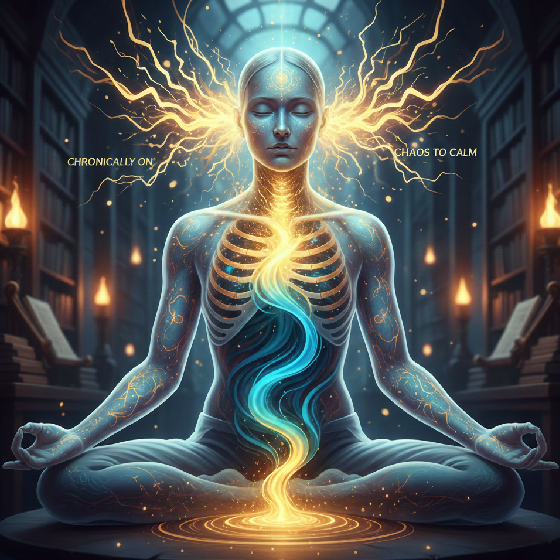
Do you remember the treacherous, inner saboteur/ inner critic from our earlier article, who insists that this one last task must always be finished? This inner voice now physically manifests itself in your body. That feeling of “oh, what a fuss” or “poeh-poeh, what a hassle” begins to create itself, settling like a heavy cloud in your head. This sensation is directly linked to the inability to truly surrender control. The inability to truly let go of control manifests.
I can hear you thinking: Yes, but who else will manage the requests for help from kids, partners, friends, family, colleagues, and employers? “Oh, what a state,” you’re truly in it alone, right!
Could it be that these symptoms above are clear indications, instead of things to be experienced as annoying and gotten rid of as quickly as possible so you can carry on? You might think of a shallow, faster breath, a kind of cramp in your diaphragm or stomach, hunched shoulders or a tense neck, headaches, teeth clenching, or teeth grinding. Does any of this sound familiar?
The Three Blockages physically show the symptoms of your blocked vital life energy, which obstructs your Chi and the path to your Inner Peace.
Your life energy (Chi) is trapped in a threefold vise:
- A cramped Diaphragm
- Hunched, tense Shoulders
- Clenched Jaw
In the previous article, we discussed the breath as an anchor. Now we take the journey deeper. Today’s challenge on your life path is not only to identify these three specific blockages but also to understand them from a Taoist perspective and then dismantle them with the precision of Nei Dan Gong.
Aha-Moment: You cannot control your external chaos as long as you allow your internal physiology to cramp, often unconsciously. The key lies, among other things, in letting go of beliefs that encourage working through willpower, and in the gentle but determined art of breathing.
The Anatomy of Holding: Why Specifically These Three?
In the Taoist view, tension is held not only in the mind, but also in the physical body (Jing). These three areas are crucial:
- The Diaphragm (The Emotional Vise): This is the muscle of breathing and emotions. With worries, anxiety or the feeling of not being good enough, for example, it contracts, leading to shallow breathing. The Chi cannot sink to the lower Dantian (the energy center in the lower abdomen).
- The Shoulders/Neck (The Burden of Control): The physical epicenter of responsibility and overload. By carrying many burdens and wanting to fix everything, this blocks the flow of Chi to the head and arms. A consequence can be working harder instead of expressing your irritation.
- The Jaw/Face (The Vise of Suppressed Expression): The place where we set control and suppressed emotions (like anger, frustration). An unyielding jaw is energetically a closed will, a literal ‘biting down’ on the situation. The tension in the jaws is directly related to the unrest in your brain—the constant, active thoughts about all your tasks.
This is often described as “Chronically On State” and this causes an upward disturbance of the Three Treasures (Jing, Chi, Shen). The Chi rises and becomes blocked in the chest, leading to restless, chaotic thoughts. Your tendency to organize is a constant, unconscious Yang (active, ascending) energy.
Chi Kung, and especially Nei Dan Gong, offers the methodology to allow the Chi to flow and to relax these physical vises and guide the Chi back to its origin (the lower Dantian – your connection to grounding). The deep, abdominal breathing we cultivate works as an internal massage and an energetic tap to redirect the ascended, hot Chi back to the earth and restore the Three Treasures to harmony. We soften the Yang and strengthen the Yin (rest, grounding).

Background and Relevance: The Three Treasures in Imbalance
According to Chinese Medicine, we are composed of the Three Treasures:
- Jing (Essence/Physical Energy)
- Chi (Life Force/Vital Energy/Consciousness)
- Shen (Spirit/Still Consciousness)
The Jing (physical foundation) is depleted, the Chi (breath) rises and becomes blocked in the chest, and the Shen (spirit) becomes restless, leading to that “oh, what a state” feeling.
The tendency to worry and organize is a constant, unconscious Yang (active, ascending) energy, which you collect in the chest and head. The Nei Dan Gong practice is essential because this style is specifically designed to guide the energy (the Chi) back to its origin (the lower Dantian in the abdomen) and restore the Three Treasures to harmony.
This is not merely a spiritual concept; it is a physiological necessity. You seek solutions to problems in work, family, and love. But as long as your breathing and your beliefs maintain the three blockages, you are giving answers from a place of exhaustion instead of centered power.
Where and How Does Nei Dan Gong Break Through the Three Physical Blockages?
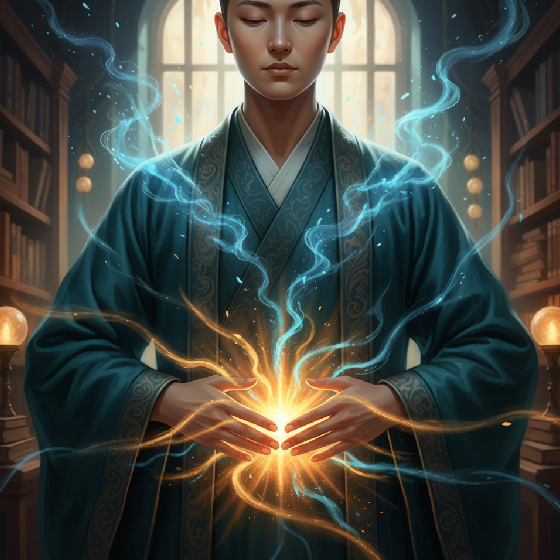
Nei Dan Gong revolves around stability and internal alchemy. Focusing on the use of Intention (Yi) is employed to guide the breath and unlock the physical blockages. We use the proven rhythm of 4-1-6-1 (4 counts in, 1 hold, 6 counts out, 1 hold), because the extended exhalation guarantees the relaxation response of the para-sympathetic nervous system, or the “rest-and-digest” system.
🔴 Blockage 1: The Cramped Diaphragm (The Emotional Vise)
- Symptom: Shallow chest breathing, tightness in the chest and stomach area, as if you are “stuck” in your emotions.
- The Nei Dan Gong Solution: The Balloon Training. The key to this obstacle is regaining the diaphragm’s full mobility.
🟡 Blockage 2: The Hunched Shoulders (The Burden of Control)
- Symptom: Tense shoulders, neck and back pain, unconsciously lifting shoulders on inhalation, which feeds the “oh, what a hassle” in your head.
- The Nei Dan Gong Solution: The Intention of Sinking. The shoulders mirror your controlling and overloaded brain (Shen). You are carrying too much.
🟢 Blockage 3: The Clenched Jaw (The Vise of Suppressed Expression)
- Symptom: Teeth grinding, neck, head, ear pain. A full, busy, restless, hurried head.
- The Nei Dan Gong Solution: The Sound of Surrender. The jaws are the gate to the skull and a direct indicator of the restlessness of the Shen. This is where we break through mental chaos with a monotasking assignment. Instead of trying to stop or push away thoughts, you give the brain a useful rhythmic task: counting.
Aha-Moment: The relaxed, expanding abdomen is direct proof that you are releasing the emotional vise of the diaphragm. This is physical empowerment. “Those ‘oh, what a hassle’ thoughts? Consider them annoying telemarketers. The 4-6 count is your ‘Do Not Disturb’ button.” The conscious focus on the counting pattern lowers the frequency of brain waves and brings you into the present.
The Basic Practice of the Dantian Breathing (Abdominal Breathing)
There are many types of breathing, which we will return to later, each with a specific effect and purpose.
The 4-1-6-1 breathing is aimed at allowing the Chi to sink to the lower Dantian, which is essential for grounding, rest, and opening the cramped diaphragm.

- Posture: Sit on your sit bones or stand hip-width upright, but relaxed. Gently close your eyes, or look softly downwards.
- Focus: Place one hand on your lower abdomen (just below the navel, where the Dantian is located) and the other hand on your chest. The hand on your chest remains passive; you want to feel no movement in the chest.
- Inhalation (4 counts): Breathe in very slowly and deeply through your nose. Feel how your abdomen (where the hand is) gently moves outwards, as if you are inflating a small balloon in your belly. This is direct proof that your diaphragm is moving downwards and you are utilizing full lung capacity. You force nothing.
- Rest: Hold for 1 count.
- Exhalation (6 counts): Exhale very slowly and completely through your mouth (or nose), with a soft “Sshhhh” sound or a sigh “Poeh-Poeh.” Feel how your abdomen slowly moves inwards, as if the balloon is deflating. This is the action of letting go and sinking with focus and intention.
- Intention: Couple the intention to release tension, ascended Chi, and worries (“poeh poeh”) and let them sink to the earth or your Inner Fort (Dantian) with every exhalation. By relaxing, you are literally surrendering control over the tension and unrest in your head.
- Rest: Do not breathe for 1 count, after which the cycle starts again.
By unlocking these Three Physical Gates with the 4-1-6-1 Chi Kung rhythm, you transform the constrictions of moments of helplessness and discouragement into an exercise in Mastery in Chi.
By combining these three steps, you shift your energy from the stressed, lifting chest to the centered, calm abdomen—the beginning of Internal Alchemy.
The Bigger Picture: The Path to the Flexible Self
The choice for Nei Dan Gong is the choice for depth, the internal sealing of the breath and the intention. It teaches you to tame the chaos of the Shen by anchoring the breath in the Jing (essence), allowing the inner alchemy to begin.
This focused work on the body is deeply rooted in Taoism. You are the Seeker who learns that the chaos in your life (work, relationships) is reflected in the chaos of your Chi.
Mastering your breathing through the focus on these three physical gates is your route to the Centered Self. It is the heroic act on your life path.The courage to structurally take time for yourself, against your internal critic, even when you think you are already fully relaxed.
- By training Diaphragm relaxation, you increase your emotional capacity and create space for external stimuli.
- By Shoulder relaxation, you reduce the burden of the world and learn what you should or should not carry.
- By Jaw relaxation, you give up control and embrace authentic expression.
You make your body an unwavering fort. The crisis forces you to stop the distractions and feel physically. Use this focus as your key to deeper self-awareness and empowerment.
Conclusion & Call to Action: Unlock, Breathe, and Flow
Seeker & Wayfinder, you now have the blueprint to unlock the Three Physical Gates.
The daily practice of this breathing is the foundation of your Inner Fort, ensuring that even when life situations challenge you, you no longer lose your center. Your journey doesn’t have to be solitary—join our circle of Wayfinders by Registering for a membership today.
Remember the most important key takeaways:
- Diaphragm (4 counts in): Expand the belly balloon. Unlock the emotional vise.
- Shoulders (6 counts out): Let them consciously and heavily sink. Let go of the burden of the world.
- Jaw (6 counts out): Relax with the sound “Poeh…”. Give up the physical vise of control.
Take 5 minutes right now to combine these three actions with the 4-1-6-1 rhythm. This is the most powerful resilient step towards your for Inner Peace.