
Estimated reading time: 1 minute
🧘 Introduction: The Invisible Gordian Care Knot
Welcome, Seeker and Wayfinder. You are my Heroes of everyday life. You have a heart overflowing with love and a tendency to take the whole world on your shoulders. You always think of the other person first and spend your days on, let’s face it, quite a bit of worrying. Consequently, you are used to living in a constant state of slight alertness, as if an invisible alarm is humming softly all day long.
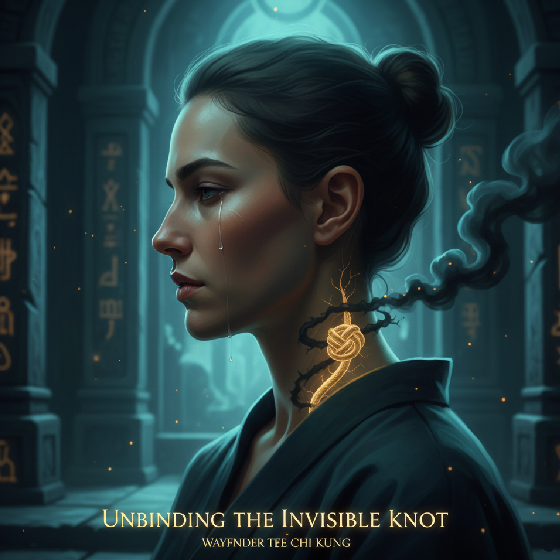
That constant buzzing is not imagination. Actually, it is your stress-response system that is working overtime. But what if I told you that the key to silencing this alarm lies deep inside? It is found in a magical, zigzagging nerve that runs right through your chest and abdomen. We call it the Vagus Nerve. This nerve is the ultimate bridge between your body and mind. Furthermore, it is the signal post of an imbalance in Yin and Yang. Today we begin the journey toward vagus nerve stimulation through Chi Kung and the ancient wisdom of Taoism.
This is your first “aha” moment: You’re not hypersensitive; your nervous system is simply overtired. And that is something that, with the right techniques, we can absolutely fix.
Key Takeaways
- The vagus nerve is key to understanding stress and balance in your body and mind.
- Vagus nerve stimulation through Chi Kung can help regulate stress and foster inner calm.
- Chi Kung techniques focus on breathing and gentle movements to promote relaxation and energy flow.
- Practicing Nei Dan Gong enhances the connection between breath and the vagus nerve for effective stress management.
- True empowerment comes from letting go of control and embracing Wu Wei for greater resilience.
🧭 Background: The Roadmap of the Inner Hero
The Hero’s journey, your life path, is full of inevitable dragons—work pressure, family tensions, health challenges, or the search for connection. Your instinct is to take on these dragons with total control and an endless ‘to-do list’. But we know that approach by now; it also exhausts you and often does not deliver what you expect. This is where the Vagus Nerve comes in. Specifically, this is where we see the deep relevance of Chi Kung.
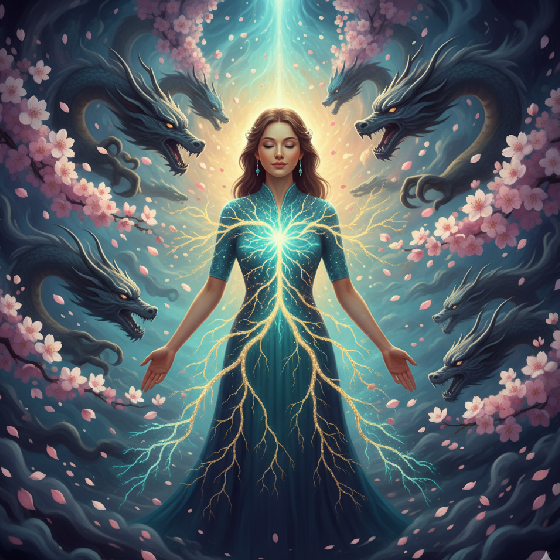
Within Chi Kung and Taoist philosophy, everything revolves around harmony, balance, and the free flow of Chi (life energy). The Vagus Nerve is in fact your physical reaction to whether your Chi is in balance. This nerve is part of the Parasympathetic Nervous System, the ‘rest-and-recover’ system. When this part of the Nervous System and especially your vagus nerve is balanced, you react resiliently. You can quickly switch from stress (‘fight-or-flight’ mode) back to calm and clarity. Therefore, you become less reactive and more responsive.
Why is this important to you, the Seeker? Because your desire to always be ready is often a symptom of a hyperactive stress system. You seek to control external chaos because you fail to perceive the internal chaos. Vagus nerve stimulation through Chi Kung teaches you to regulate the inner world. Consequently, this eliminates the need to micromanage the outside world in detail. This is true empowerment: the ability to let go of control, knowing that your internal system is resilient enough to handle any challenge. We will now look at exactly how the ancient practices of Chi Kung harness this modern, scientific connection.
Common Symptoms of Vagus Nerve Imbalance
The physical complaints can be very diverse because the vagus nerve is connected to many organs. They are often related to a chronically overloaded nervous system. Here is an overview:
🧘 Stress and Relaxation Problems
- Difficulty relaxing and feeling constantly rushed.
- Anxiety symptoms or panic attacks.
- Sleep problems and chronic fatigue or lack of energy.
- Chronic stress and difficulty dealing with stress.
🍎 Digestive Problems
- Irritable Bowel Syndrome (IBS)-like symptoms.
- Bloating, constipation, or diarrhea.
- Heartburn (reflux) or other stomach upset.
- Delayed gastric emptying, feeling full quickly.
❤️ Heart and Respiratory Complaints
- Palpitations or a heart rate that is too fast or too slow.
- Shallow breathing (high breathing) or shortness of breath.
- Dizziness or tendency to faint due to a drop in blood pressure.
🗣️ Throat and Neck Complaints
- Difficulty swallowing or a hoarse voice.
- Feeling of a knot in the throat.
- Cranial pressure or tension in the neck and shoulders.
🧠 Mental and General Complaints
- Concentration problems or brain fog.
- Depressive symptoms or chronic mood problems.
- Chronic pain (such as tension headaches or migraines).
- Increased inflammation sensitivity and a weakened immune system.
Important: These complaints can also have other medical causes. It is always advisable to contact your doctor if you have persistent, unexplained symptoms.
🌬️ Where and How Do We Find the Vagus Nerve in Chi Kung?
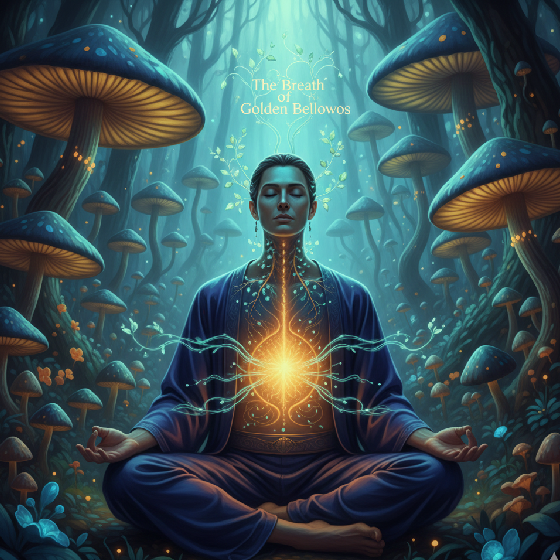
The core principle of Chi Kung is the cultivation and circulation of Chi. But where exactly is that connection with the Vagus Nerve? It is in the foundation of the flow: breathing. In most Chi Kung styles, and certainly in my beloved Nei Dan Gong, the focus is on Abdominal Breathing or Diaphragmatic Breathing. The breath becomes long, deep, and still, with the exhalation often being lengthened.
Here comes the magic: the Vagus Nerve is closely connected to the Diaphragm. When you breathe in calmly and deeply and especially exhale slowly, your diaphragm massages and stimulates this nerve. This causes a direct physical shift:
- Physical Energy (Jing): The slowing of breathing automatically slows down your heart rate. It increases your Heart Rate Variability (HRV). This is the scientific indicator for a balanced vagus nerve. A higher HRV means that your heart—and therefore your Vagus Nerve—can respond flexibly to stress.
- Emotional Energy (Shen): The slow, flowing Chi Kung movements create a meditative state. Your consciousness leaves the merry-go-round in your head and sinks to your Dantian. This interrupts the chain of worry and fear that keeps your Vagus Nerve constantly “on.”
- Mental & Spiritual Energy (Chi): The conscious intention and focus on the flow of Chi, as in the Spine Work in Nei Dan Gong, helps you break free from the idea that you have to control everything. You realize that there is a deeper, natural flow.
Aha moment 2: You have always seen breathing as something that happens to you. However, Chi Kung teaches you that breathing is something you control. And by directing the breath, you directly control the Vagus Nerve. You take control of your internal stress factory. Think of that moment when you almost exploded against a colleague; a deliberate lengthening of the exhalation could have prevented that nuclear reaction by calming your system within seconds. This is vagus nerve stimulation through Chi Kung in everyday life.
🌌 The Taoist Connection: Wu Wei and the Lifestream
This concept of regulating the Vagus Nerve through breath and movement finds its deepest roots in Taoism. The central notion of the Tao is the Way of nature, the universal flow. And the ultimate state of being is Wu Wei: ‘Non-Action’ or better translated as ‘Acting without forcing’.
You, the dedicated Wayfinder, are often at odds with this principle. You push against the river, resulting in enormous social growth, but at a high personal cost of exhaustion and stress. The Vagus Nerve is the instrument that helps you practice Wu Wei on a natural level:
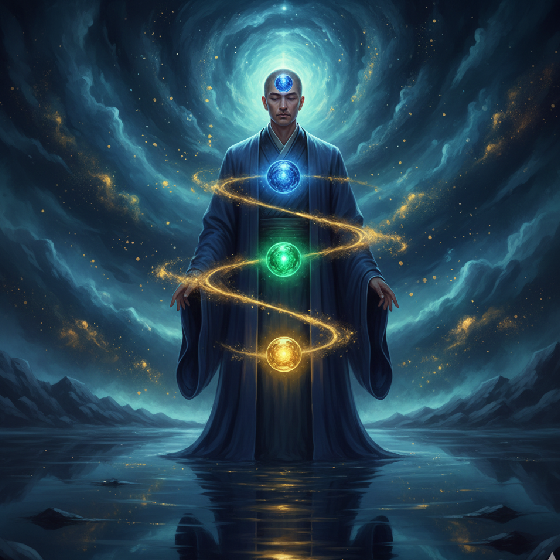
- The ‘Fight-or-Flight’ Illusion: When your Vagus Nerve is suppressed by stress, your body perceives the smallest setback as life-threatening. Your sympathetic nervous system springs into action, ready to fight or flee. This is the opposite of Wu Wei.
- Chi Kung as an Exercise in Wu Wei: The slow, gentle movements of Chi Kung, especially in Nei Dan Gong, literally teach you to let go of power. You learn to let the movement happen instead of forcing it. This is the embodiment of Taoism in motion.
- Application in Life Challenges: Imagine a situation involving conflict. The old you would immediately go on the defensive (Fight). The new you, with a trained Vagus Nerve, creates a microsecond of breathing space. Because of that pause, you can react from calm and clarity (Wu Wei) instead of from the stress response.
Aha moment 3: Your need for control is an attempt to feel safe. But true safety lies in your body’s ability to return to calm in the midst of the storm. Taoism teaches you that by not forcing (Wu Wei), you actually gain more strength. By regulating your Chi through the Vagus Nerve, you transform into a flexible Wayfinder.
🌟 The Power of Nei Dan Gong: The Salamander Practice

The technique is subtle and works deeply: the directing of the breath, the Spine work in your Neck that stimulates the entire central nerve pathway, and the meditative focus on the energy centers (Dantian). This is crucial for vagus nerve stimulation through Chi Kung:
- Fine Attunement: The extremely slow movements require an exceptional degree of self-awareness. You can feel the subtle tingling of the Chi in your limbs. This forces you to get out of your head and land fully into your body—a direct soothing message to the Vagus Nerve.
- Deepest Relaxation: Nei Dan Gong avoids excessive muscle tension, which inherently calms the Vagus Nerve. You train your body to relax while moving, integrating the Parasympathetic response more deeply.
- Converting Stress: The focus is not only on relaxing, but on actually converting disturbing emotions and stress into usable, pure Chi. You are engaged in Empowerment through alchemy.
🦎 The Execution of the Salamander Exercise
This exercise can be performed either sitting (on a chair, with both feet flat on the floor in Wu Wei position) or standing. The most important thing is that the spine is upright and relaxed.
1. The Basic Attitude and Intention (Jing)
- Posture: Sit or stand up straight. The shoulders are relaxed. The arms rest loosely along the body or on the thighs. The chin is slightly retracted, as if a string pulls up your crown.
- Breathing: Breathe calmly and naturally through the nose (4-1-6-1). Try to slowly lower the breath to the lower abdomen (Dantian) without forcing.
- Intention (Yi): Bring your attention to the neck, the area just below the skull edge. Imagine that your head moves very lightly and effortlessly.
2. The Sideways (No) Movement
This part focuses on the lateral bend and extension of the upper cervical vertebrae.
- Start: Insert the chin very lightly.
- Movement: Let the head ‘slide’ or tilt very, very gently and slowly to the right, while breathing in. It is not about how far you get!
- Focus: The movement is minimal. Think of a millimeter. It’s a soft, gliding motion, not a quick kink. You can feel the stretch on the left side of your neck.
- Back: Slowly return to the center while you breath out and pause.
- Other Side: Let the head gently ‘slide’ to the left, while breathing in again. You can feel the stretch on the right side. Breath out while sliding back to the center.
- Repetition: Repeat this in a smooth, constant rhythm that is in sync with your breathing.
AHA Moment: This is the Salamander carefully checking whether the coast is clear. This tiny movement massages the vagal branches that run along the neck.
3. The Forward and Backward (Yes) Movement
This section focuses on the bend and extension, still with an emphasis on the high neck.
- Start: Return to the neutral stance.
- Movement (Forward): Cut or bend your head very, very gently forward while breathing in, as if nodding yes, and breath out while moving to neutral stance. The movement only comes from your upper cervical vertebrae.
- Movement (Backward): Cut or bend your head back very gently, as if you are nodding softly yes.
- Focus: Again, the movement is minimal and extremely relaxed. It should never hurt.
- Repeat: Repeat these gentle nodding movements, trying to release the tightness in the neck.
4. The Integration and Completion (Chi)
- Combination: After the individual movements, you can combine them in a smooth, undulating motion.
- Duration: Perform the exercises for 3 to 5 minutes. The effectiveness is in the repetition and the softness.
- Closure: Stop the movement. Sit or stand still for 30 seconds to a minute. Feel the calmness and resonance. You might notice a sense of inner peace.
Tips for the Seeker: Because you often tend to control, the biggest challenge is not trying to do it perfectly. Pretend you’re a little lamb just learning to carry its head: soft, curious, and totally relaxed.
📢 Closure & Call to Action: Follow the Flow
Remember these key points, Guide:
- Aha 1: Your stress is an overtired nervous system, not a character flaw.
- Aha 2: Your breathing is the remote control of your Vagus Nerve.
- Aha 3: Real control is found by letting go (Wu Wei).
- Aha 4: Your internal calmness radiates to your entire environment.
Your quest for personal growth and empowerment continues. Do you want to learn more about how you can apply these deep Chi Kung and Taoism insights to your unique life challenges? Do you want to learn the specific Nei Dan Gong exercises for vagus nerve stimulation through Chi Kung?
Join our community for the latest articles on chi kung, self-awareness, and stress regulation. You’ve taken the first step. Keep following the flow.