Estimated reading time: 11 minutes
Mastering Kidney Chi Kung exercises for emotional balance allows you to transform deep-seated fear into a grounded sense of inner security.
Welcome again, you wonderful Seeker and Wayfinder on this winding path we call life. Grab a cup of tea, take a deep breath into your lower abdomen, and feel how the chair or couch is carrying you at the moment. You’re here, and that’s exactly where you need to be.
In our previous legs of this journey, we’ve looked at the power of focus and the need for structure. Today we arrive at a landscape that many of us instinctively try to avoid: the deep, still, and sometimes terrifying waters of our own emotions. We’re going to talk about the water element, the kidneys, and that one big shadow that so often throws us off balance: fear. But don’t be afraid – we’re not going to drown. Instead, we are going to learn how to sink into confidence through the ancient art of Internal Alchemy.
Key Takeaways
- Kidney Chi Kung exercises for emotional balance transform fear into inner security by understanding the water element.
- The kidneys serve as your body’s rechargeable battery, impacting emotional health and energy levels.
- Practicing specific Chi Kung exercises recharges kidney energy and calms the nervous system, enabling emotional release.
- Incorporating lifestyle changes along with Chi Kung ensures lasting emotional balance and energy conservation.
- Embracing Wu Wei helps you navigate fears and promote personal growth, leading to a deeper sense of self-awareness.
The Call of the Deep: Understanding the Water Element
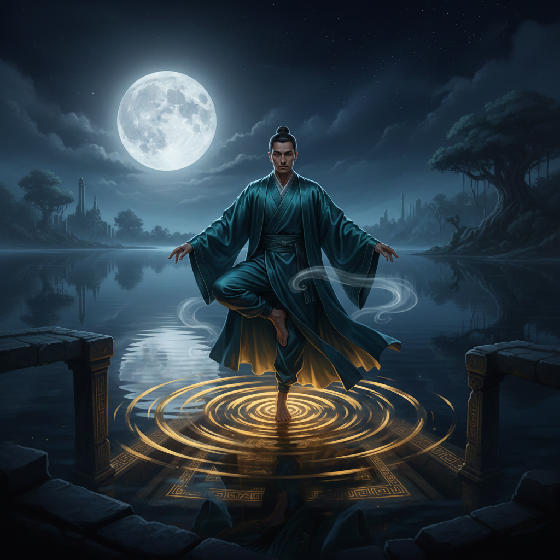
Imagine you are standing at the edge of a huge, mirror-smooth lake in the middle of the night. The moon casts a silver glow on the water, but underneath everything is black and unfathomable. You feel a shiver down your spine. This is the domain of the water element. In Traditional Chinese Medicine (TCM) and Taoism, this is the place where our deepest fears live. However, it is also where our greatest source of wisdom and life force, known as Jing, is stored.
As a therapist, I see clients every day who tend to kick hard as soon as they feel this water. You know the drill: that tendency to want to control everything, to multitask until you are close to a burnout, and always to take care of others first. Consequently, we become like swimmers who are so afraid of going under that we get cramps in our calves.
In Chi Kung, we learn that fear is not an enemy to fight with control. Fear is simply frozen energy. Therefore, the only way to let that energy flow again is not by kicking harder, but by daring to sink. Not to the bottom to perish, but to your own inner foundation. Kidney Chi Kung exercises for emotional balance provide the vessel for this descent.
Why Your “Battery” is Running Low: The Kidney Connection
Within Taoism, the water element is linked to winter, the kidneys, and the bladder. The kidneys are considered the ‘root of life’ because they act as your body’s rechargeable battery. However, when you live from a constant state of ‘being on’ – which we have elevated to an art form – you mercilessly drain that battery.
Why is this so relevant for the creative professional or the caring jack-of-all-trades? Your natural tendency to organize is often a survival mechanism to keep the uncertainty of life at bay and not to look at your deeper fears. Ironically, that urge to control actually depletes your kidney energy, making you even more anxious. This creates a vicious circle where stress leads to depletion, and depletion leads to more fear.
Signs of Kidney Chi Depletion:
- Chronic Lower Back Pain: A physical manifestation of “holding on” too tight.
- Adrenal Fatigue: Feeling “tired but wired” at the end of the day.
- Aversion to Cold: Feeling chilled to the bone, even in a warm room.
- Decision Paralysis: Finding it impossible to choose because the “Willpower” is weak.
By practicing Chi Kung for mental health, we specifically target the adrenal glands and the psoas muscle. These areas are the physical storehouses of the “fight or flight” response. When we soften these tissues, the nervous system finally receives the signal that it is safe to relax.
Nei Dan Gong: The Deep Sea Diving of Chi Kung
In the world of energy work, there are countless styles available. You have the more gymnastic forms that focus on flexibility, and the martial forms that focus on strength. But why did I choose Nei Dan Gong as my primary path for emotional healing?
The answer lies in the depths. While many styles keep moving on the surface, Nei Dan Gong is the ‘Deep Sea Diving’ of Chi Kung. It is about internal alchemy. We don’t just work with the muscles, but we transform the essence (Jing) within ourselves. Instead of just waving your arms to ‘feel energy’, in Nei Dan Gong we descend to the Lower Dan Tian.
Physically, the water element manifests in the lower back and knees. Do you often suffer from a stiff lower back after a day full of deadlines or does your knee regularly play up when you are faced with choices? That is your water element calling for attention. Emotionally, you notice it when the “what if” thoughts take over. By practicing Kidney Chi Kung exercises for emotional balance, you move the energy from the overactive mind back down to the roots.
Step-by-Step Kidney Chi Kung Exercises for Emotional Balance
To improve your mental health through Chi Kung, you must move beyond theory and into practice. Below are three foundational exercises designed to recharge your kidneys and soothe the nervous system.
Exercise 1: The Wu Chi Posture (The Art of Sinking)
The most important part of Internal Alchemy is learning to do nothing effectively.
- Stand with your feet shoulder-width apart, knees slightly “unlocked.”
- Tuck your tailbone slightly so your lower back becomes flat and open.
- Place your hands over your Lower Dan Tian (two inches below the navel).
- As you breathe, imagine your weight melting into your heels (focus on Bubbling Springs) and deep into the earth.
- Stay here for 5 minutes. If you feel shaking, do not worry; that is simply “frozen” fear leaving the nervous system.
Exercise 2: Breathing into the “Gates of Life” (Ming Men)
The Ming Men point is located on the spine, directly opposite the navel. It is the “door” to your kidney energy.
- Inhale slowly and imagine the breath expanding your lower back, pushing the Ming Men outward.
- Exhale and feel a dark blue light (the color of the water element) filling your kidneys.
- This exercise helps regulate cortisol levels and brings an immediate sense of calm to the mind.
Exercise 3: The Kidney Sound (Chooeehh)
In the Six Healing Sounds, the sound for the kidneys helps to vibrate the organ and release “cold” or “contracted” energy.

- Sit on the edge of a chair with your legs shoulder-wide
- Put your feet under your knees towards the chair and support yourself on your toes
- During a deep inhale, embrace your knees with both hands and focus attention on your kidneys and imagine your kidneys filling up. Your elbows are bent.
- While exhaling, make the sound Chooeehh (like the sound of the wind) and stretch your elbows. Imagine that you blow all fear out of your kidneys like a gray fog and make way for a deep, dark blue self-confidence.
5. After three times you put your hands in your lap and breathe calmly and focus your attention on what you are experiencing in your kidneys
The Taoist Connection: Wu Wei and the Path of Water
The ancient Taoists were obsessed with water because it represents the ultimate power of softness. Lao Tzu wrote in the Tao Te Ching that nothing in the world is as soft as water, yet nothing can resist it. This brings us to the concept of Wu Wei, or acting by non-action.
This doesn’t mean you have to lie on the couch all day with a bag of chips. Instead, Wu Wei means that you move with the flow instead of swimming against it. In our daily lives, this means recognizing when we are ‘forcing’ a situation. When you feel the fear creeping up – that chill, that short breath – don’t try to organize a solution right away.
In Taoist psychology, we say, “Let the muddy water rest, and it will clear itself.” This is where the synergy between Chi Kung exercises and your daily life arises. Through the physical practice, you teach your body that ‘sinking’ is safe. Consequently, your nervous system calms down, and suddenly you see that the situation at work is not as catastrophic as you thought.
Nei Dan Gong uses the breath to let the ‘fire’ energy of the heart descend to the ‘water’ energy of the kidneys. This creates an alchemical process that produces steam: new, vital energy. This is why I love this style; it is not just an exercise, but an internal transformation that increases your self-awareness down to the cellular level.
Integrating Chi Kung into a Modern Lifestyle
To maintain emotional balance, you cannot rely on a 10-minute exercise alone. You must treat your kidney energy with respect throughout the day. Because the water element is about conservation, you must learn where you are “leaking” energy.
- Warmth is Key: The kidneys hate the cold. Drink warm ginger tea and keep your lower back covered.
- The Power of ‘No’: Every time you say ‘yes’ when you mean ‘no’, you drain your battery.
- Somatic Breaks: Every hour, stand in the Wu Chi position for just 60 seconds. This resets your stress response before it becomes chronic.
By combining Kidney Chi Kung exercises for emotional balance with these lifestyle shifts, you create a fortress of inner peace. You are no longer at the mercy of external triggers because your “root” is deep and strong.
The Wayfinder Journey: Becoming the Ocean
Let’s zoom out for a moment. You are a Seeker, a Hero on a Quest. In the previous articles, we have taken the first steps into the forest of personal growth. Today we arrived at the river. You can try to jump over it, you can try to build a complicated bridge (control!), or you can step in and rely on your buoyancy.

The water element reminds us that we are part of a larger whole. Our individual fear is often rooted in the idea that we are separate. However, water always seeks connection. It flows to the lowest point to meet with other waters. When you move your consciousness from your worrying head to your kidneys and the soles of your feet, you reconnect with the earth.
You are no longer a loose droplet afraid of evaporating; you become the ocean. This gives a huge sense of empowerment. The situations in your life may not change immediately, but you have changed. You are no longer the drowning man, but the captain who knows how to use the current.
Summary and Takeaways: Your Path to Confidence
To ensure you can implement these changes today, remember these core principles of Chi Kung for emotional stability:
- Sinking is not losing: Lowering your weight to your Lower Dan Tian is the fastest path to emotional stability.
- The Kidneys are your treasure chest: Be careful with your energy. Say “no” to multitasking and “yes” to silence.
- Wu Wei works: Sometimes the best action is to do nothing at all and let the muddy water rest.
- Nei Dan Gong Transformation: Use your breath to let the heat of your worries drop and recharge your inner battery.
- Consistency over Intensity: Practicing for 5 minutes every day is better than an hour once a week.
Your Wayfinder Action Plan:
- Sign up here for a membership with more in-depth articles on Internal Alchemy.
- Leave a comment below: Where in your life are you currently “swimming against the current”?
Trust is not an absence of fear, but the courage to step into the water with that fear. Sink deep, breathe calmly, and know that the Tao is always flowing beneath you.
Until next time on our trip, Wayfinder. Keep flowing!